
Walking Football in Australia has come a long way in a relatively short time.
From small social kick-abouts in local parks to structured national squads preparing for international tournaments, the game has grown through the passion of volunteers, players and community leaders across the country.
As that growth continues, one question naturally arises:
How do we ensure the long-term stability, credibility and opportunity of Walking Football in Australia?
The answer lies not in division but in alignment.
A Global Game Finding Its Shape
Internationally, Walking Football has evolved through multiple associations, each formed with good intent and strong community support. That grassroots energy is one of the sport’s great strengths.
In England, The FA and the Walking Football Association are currently working collaboratively to review the Laws of the Game and explore greater alignment. Their public survey reflects a mature recognition that cooperation supports sustainable growth.
At international level, the Federation of International Walking Football Associations (FIWFA) provides a structured framework for global competition and governance.
The Walking Football Federation Australia (WFFA) is a foundation member of FIWFA, ensuring Australia has representation within the evolving international landscape.
This positioning offers Australian players a clear and recognised pathway to international competition.
Why National Alignment Matters in Australia
Australia’s geography and sporting landscape present unique challenges. With states spread across vast distances, clarity of structure becomes especially important.
Players, referees, coaches and partners benefit from understanding:
-
What the recognised national pathway is
-
How international selection operates
-
Which rules apply at national level
-
How Australia connects to global competition
In this context, WFFA provides a national framework that links walking football in Australian to international structures through FIWFA.
This does not diminish the role of local or state-based initiatives. On the contrary, grassroots activity is essential to the health of the sport. But as participation grows, alignment between grassroots development and national governance becomes increasingly important.
A coordinated national approach helps ensure consistency, safety standards and credibility when engaging with sponsors, councils and health organisations.
Laws of the Game: A Case for Thoughtful Consistency
Around the world, Walking Football has seen variations in rules — from ball height restrictions to interpretations of running and contact.
Local adaptations helped the sport take root. However, as international tournaments expand, greater consistency in the Laws of the Game can support:
-
Clearer referee development
-
Smoother international competition
-
Reduced player confusion
-
Stronger governance credibility
The discussions currently underway in England reflect a broader global conversation about how best to balance tradition, flexibility and long-term sustainability.
Australia benefits from remaining connected to that international dialogue rather than operating in isolation.
International Recognition and the Broader Football Community
The FIFA Walking Football Toolkit references the Walking Football Association in England within its development framework. This demonstrates that Walking Football is increasingly acknowledged within the broader football ecosystem.
As recognition grows, having transparent and credible national governance structures becomes even more important.
Through its foundation membership of FIWFA, WFFA contributes to Australia’s visibility and participation in international forums.
That international connection strengthens opportunities for Australian players and administrators alike.
The Value of a Clear National Pathway
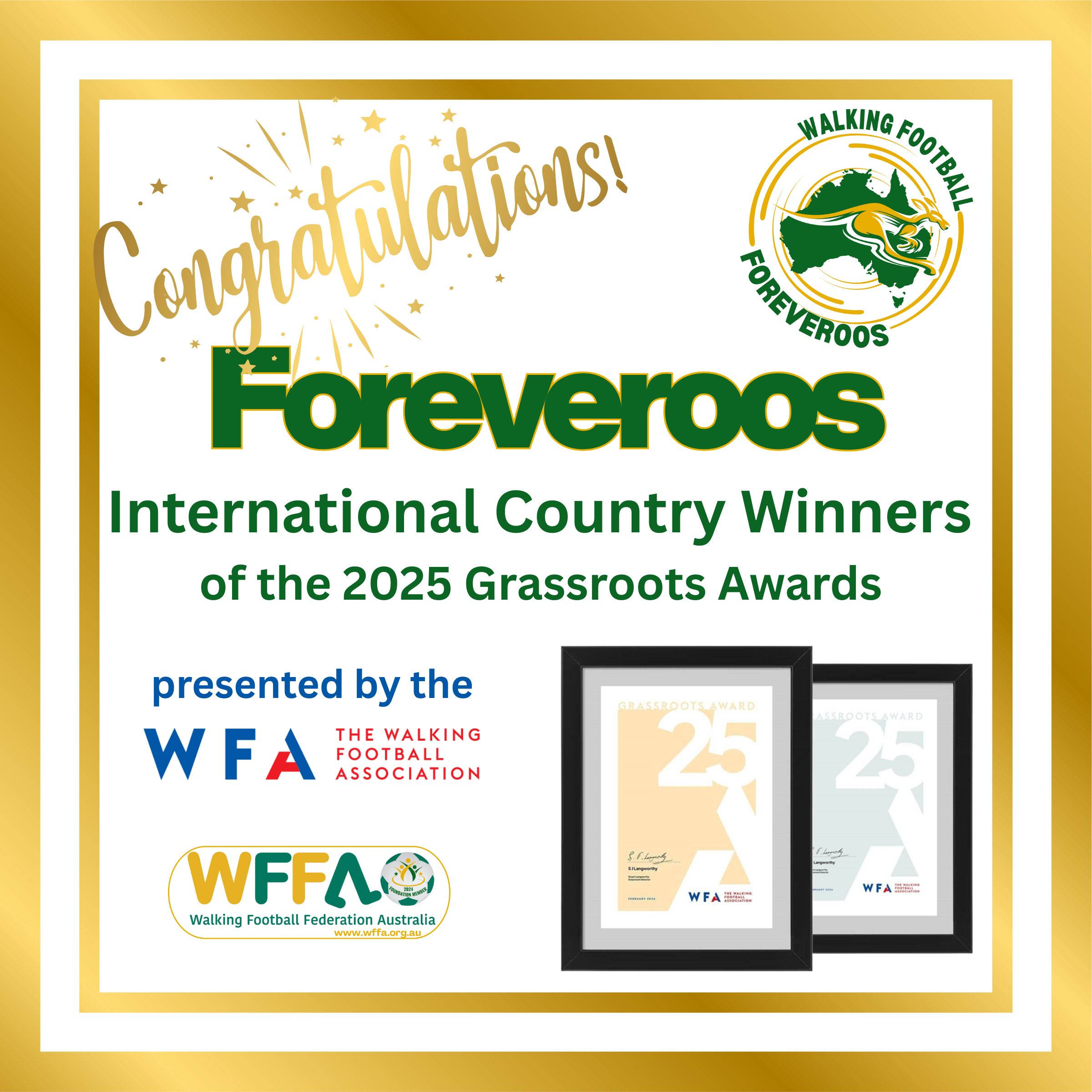
WFFA’s national squads, the Foreveroos, demonstrate what coordinated national effort can achieve.
Australia is one of only two nations, (the other is England), to have competed in every age and gender division at each World Nations Cup. That achievement reflects collaboration across states under a recognised national framework.
Such milestones are not the result of one individual or one region, they come from cooperation.
A stable national structure helps ensure that players from any state can see a clear pathway from local participation to international representation.
Collaboration with Clarity
Walking Football thrives because of the many associations, clubs and community initiatives that contribute to its growth. Diversity of ideas strengthens innovation and keeps the sport vibrant at every level.
At the same time, sustainable long-term development depends on clarity and shared understanding — particularly in relation to national governance, international affiliation, tournament standards and transparent player pathways. In Australia, WFFA currently provides the recognised national and international linkage.
The opportunity ahead is not about exclusivity. It is about cooperation, alignment and shared standards that allow Walking Football to grow with credibility, stability and integrity.
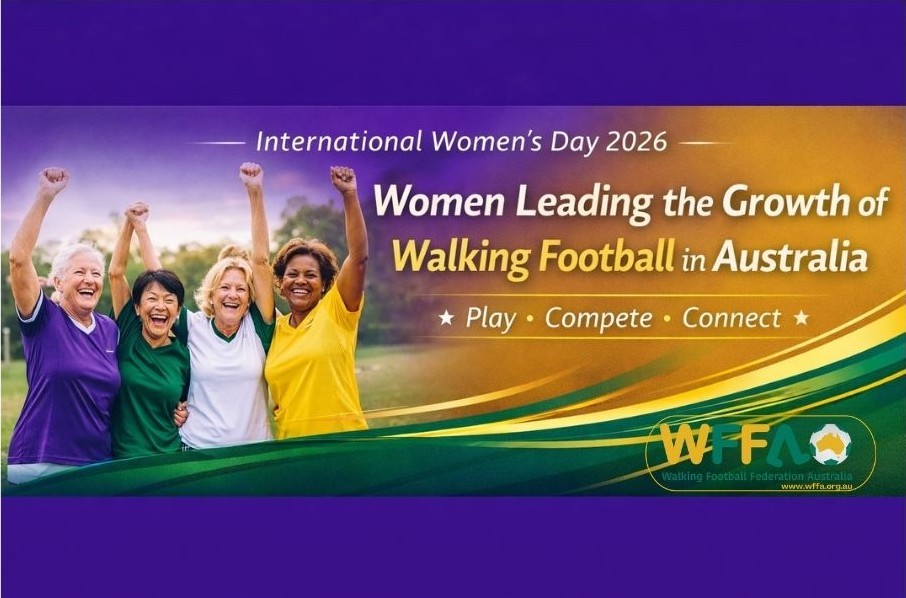
Walking Football is far more than a modified version of the game. It promotes healthy ageing, fosters social connection and creates inclusive opportunities for men and women across generations. As participation expands, governance must evolve alongside it — thoughtfully, strategically and collaboratively.
Australia’s future in Walking Football will be strongest when grassroots passion continues to flourish, national structures remain clear and credible, international relationships are maintained, and associations work constructively together.
Your Voice Matters
Internationally, important conversations are taking place about the future of the Laws of the Game and how Walking Football can be aligned to support long-term growth. The FA and the Walking Football Association have opened a survey to gather feedback from players, referees, coaches and administrators.
While this process is being led in England, the outcomes may influence broader international discussions. For Australia, staying informed and engaged in these conversations is both sensible and strategic.
If you are involved in Walking Football at any level, we encourage you to take a few minutes to contribute your perspective. Constructive input helps shape a game that is safe, inclusive and sustainable for everyone.
Have your say, click here to participate in the survey.
The future of Walking Football will be built not just by organisations, but by the collective voices of those who play, officiate and lead it.